Music Therapy for Adults

START A REFERRAL

Regulate. Reconnect.
Rediscover through music.

Music therapy isn’t just about music. It’s about creating a space that feels like yours — where you can show up exactly as you are, no pressure, no need to perform.
Evidence based music therapy for adults, right here in North Ryde

Music therapy at Sound Expression offers more than a creative outlet. It’s a clinically grounded, evidence-based approach to building emotional resilience, improving daily functioning and reconnecting with your sense of self.

Many of the adults we support are working through mental health challenges (such as depression, anxiety, trauma, bipolar, schizophrenia), disability, or neurodivergent experiences. Others are adjusting to big life shifts or simply looking for a safe, supported space to process and grow.

We use music as a therapeutic tool to help you feel more in control, more connected and more like yourself.

Our clinic is at North Ryde, parking out front, close to public transport and conveniently has a café next door where support workers or family can wait while you have your music therapy session.

Real therapy through
music. For life.

Music therapy can be accessed privately or through your NDIS funding. We’re a registered provider and here to help you figure out what works best for you.

Music therapy is your space to reconnect with what matters, your voice, your rhythm, your sense of self.

We use music to support emotional regulation, confidence, expression and everyday wellbeing in a way that feels grounded, human and entirely yours.
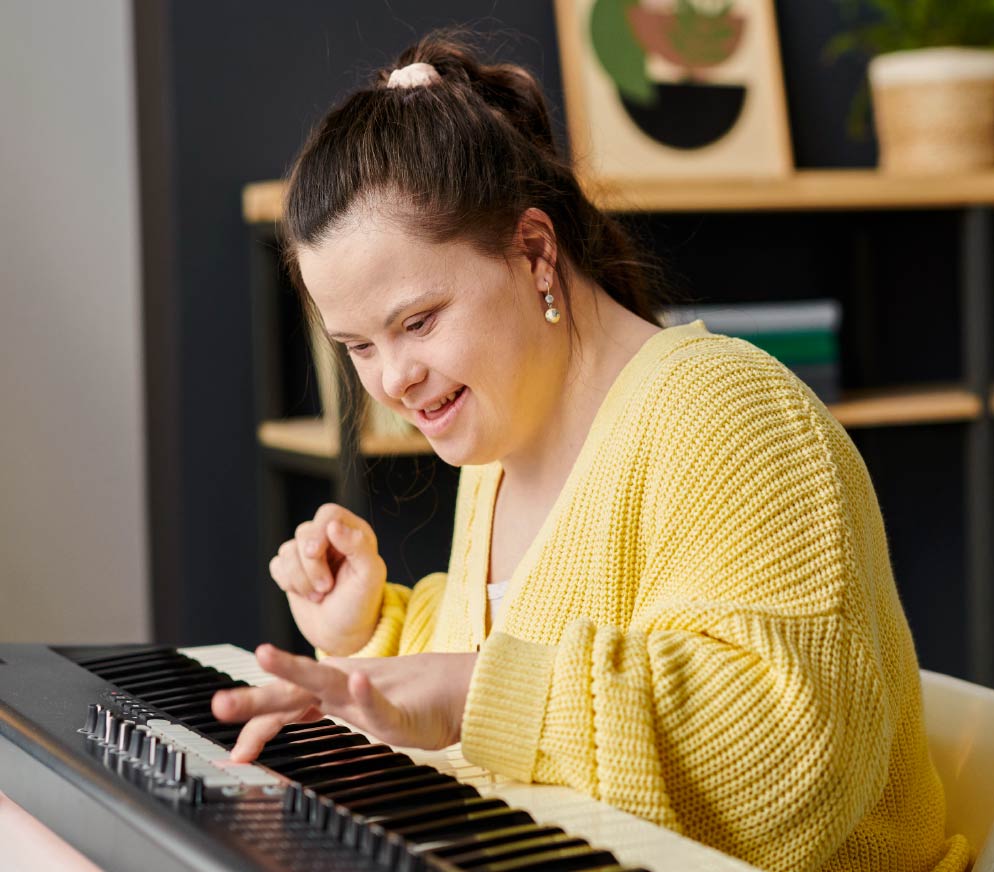
Support for all kinds of grown-up humans

We work with adults from all walks of life and abilities.

NEURODIVERSITY

Autistic, ADHD, or neurodivergent adults who seek support that works for them, not against them.

DISABILITY

Individuals with intellectual or physical disabilities.

Mental Health

Working through depression, anxiety, trauma and other mental health conditions.

LIFE CHANGES

Adjusting to change — maybe grief, isolation, or new challenges in life.

RECOVERY

Recovering from a stroke or brain injury and want to build back your capacity.

PERSONAL GROWTH

You feel stuck, disconnected, or want to build confidence.

Grounded, human and shaped around you

You don’t need any musical experience. What matters is how we use music to support your goals in ways that feel calm, collaborative and clinically informed.

Our Registered Music Therapists work with you to understand what’s meaningful, what’s challenging and what kind of support feels right. Sessions might involve playing instruments, listening, creating or discussing music. Our music therapists help you to create a therapeutic musical space that feels right for you. Every session is designed around how you show up that day.
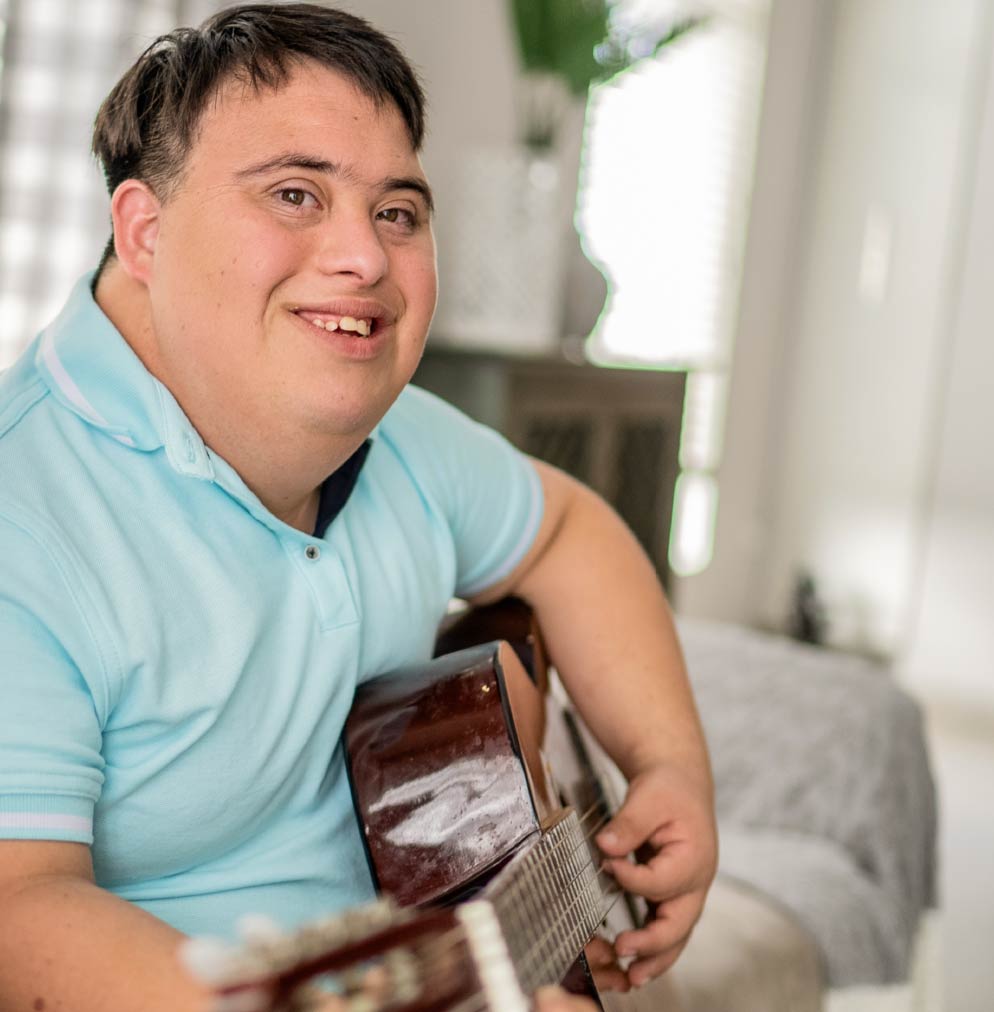
Is music therapy right for me?

Music therapy can help you work toward meaningful personal goals, from emotional regulation and confidence to communication, connection and daily living skills.

Here are some questions that might help you decide if it’s the right fit:

  • Is music an important part of your life?
  • Are you looking for a new way to express yourself?
  • Do you sometimes feel like words aren’t enough?
  • Would you like to share music with others in a way that feels safe and supported?
  • Does music affect your mood, energy, or emotions — for better or worse?

If you said yes to any of these, music therapy might offer a powerful space for growth, reflection and reconnection.

Supporting
NDIS goals

If you’re a NDIS participant, chat to us about your NDIS plan to see how music therapy can help achieve your goals.

All goals are tracked and evaluated to help you thrive in daily life, work, or social settings.
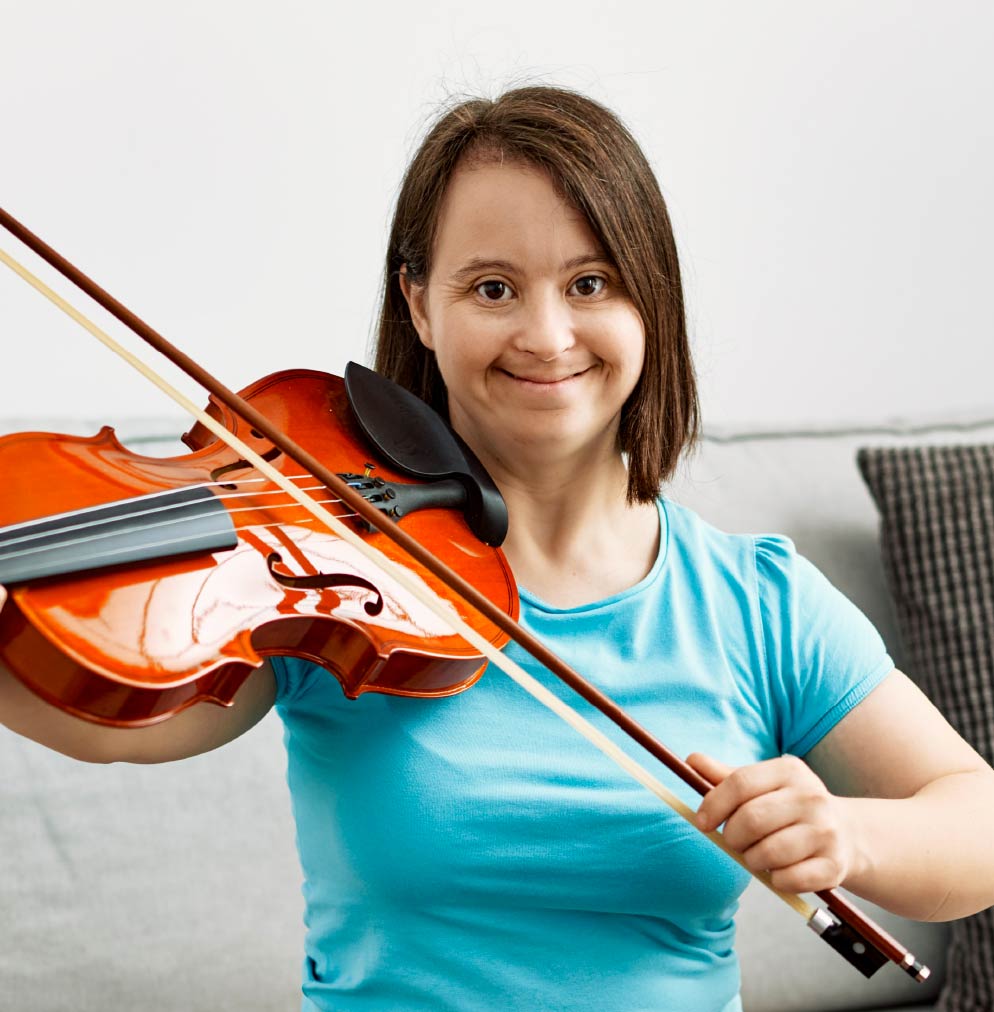
Personal development

  • Autistic, ADHD, or neurodivergent adults who seeks support that works for them, not against them.
  • Enhance communication skills and build participation in interpersonal interactions and the community.
  • Assume responsibility, confidence building, self-expression and meeting challenges.
  • Foster psychological wellbeing and the ability to relate to one another in the community.
  • Assist with safe and supported emotional expression.
  • Reduce anxiety and assist in mood regulation.
  • Function as independently as possible.
  • Maintain or improve mobility, communication and/or cognitive processing.

Life skills

  • Cognitive, social, emotional and interpersonal elements.
  • Sensory integration.
  • Develop fine and gross motor skills.
  • Enhance listening, concentration, turn-taking, waiting, sharing, making choices, decision-making.
  • Skills developed and practised in music therapy have the ultimate objective of helping each client function better in their daily environments including work, home and leisure.
  • Reduce isolation and increase community engagement.
  • Increase opportunities for social interaction.

Creative Expression

  • Opportunities for creative achievement and working towards experiences that are both meaningful and satisfying.
  • Provides you with experiences that enhance communicative meaning and personal self-esteem.
  • Build a positive atmosphere with a balance of containment and freedom, as well as individual and collective participation.
  • Facilitate emotional growth and development.

How it works, step by step

We personalise therapy based on your goals, preferences and how you engage best.

  • 1 Initial consultation
    We begin with a conversation and a consultation to understand your needs, strengths and how you respond to music-based experiences.
  • 2 Goal setting
    Together, we identify what’s meaningful for you — whether it’s self-expression, emotional regulation, memory, motivation, or movement. We align these with your NDIS goals if applicable.
  • 3 Commencement of therapy
    Music therapy sessions run for 30, 45 or 60 minutes and are shaped around your needs for support. You might play instruments, listen, sing, create music, or use rhythm and structure to support daily life.
  • 4 Evaluation
    We regularly check in on how things are going. If you’re using your NDIS funding, we provide updates and reports to support your plan reviews.

What your sessions might look like

No two sessions are the same, they’re shaped around you. On any given day, you might:

  • Create music to express something you can’t put into words.
  • Use rhythm to support focus, movement or regulation.
  • Write lyrics or songs to reflect on your experiences.
  • Listen to music to help regulate your nervous system.

Prefer something
social?

We also offer group music therapy sessions for adults looking to connect, collaborate and grow alongside others.

Voices from the Community

“Transitions used to be a daily struggle. Since starting music therapy, she’s calmer and more confident — especially when we use her goodbye song. It’s made such a difference.”

“My son is more confident and relaxed.”

“Not only did it help, but my son took to it like a duck to water.”

“Now we use music as a tool in so many areas of our lives…when we are sad or need to self regulate or when we need to use music as a distraction.”

“Music Therapy turned out to be by far the most beneficial and fun therapy she is getting.”

“My musical expression has been amplified far beyond my initial state of ‘disrepair’. Interaction has crystallised to bring back somewhat near resembling my former competence.”

We’re welcoming new clients

You can access music therapy privately or through your NDIS plan.

Get to know us chat

Ask questions, talk through your goals

Submit a referral form

We’ll guide you through the process